
SCIENCE OUTDOOR PARK
LEARN SCIENCE. OUTSIDE THE CLASSROOM.
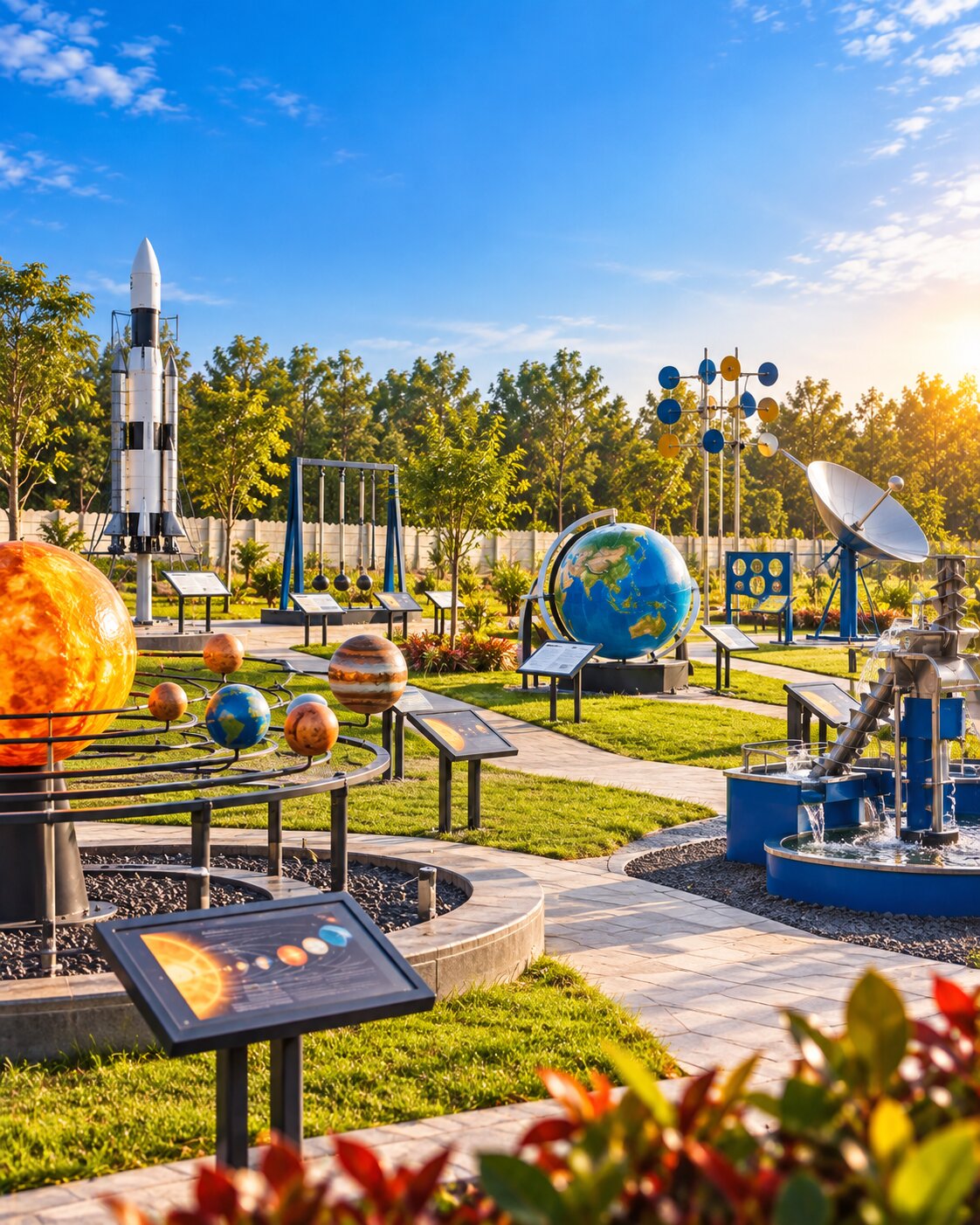
FROM STATIC DISPLAYS TO ACTIVE DISCOVERY
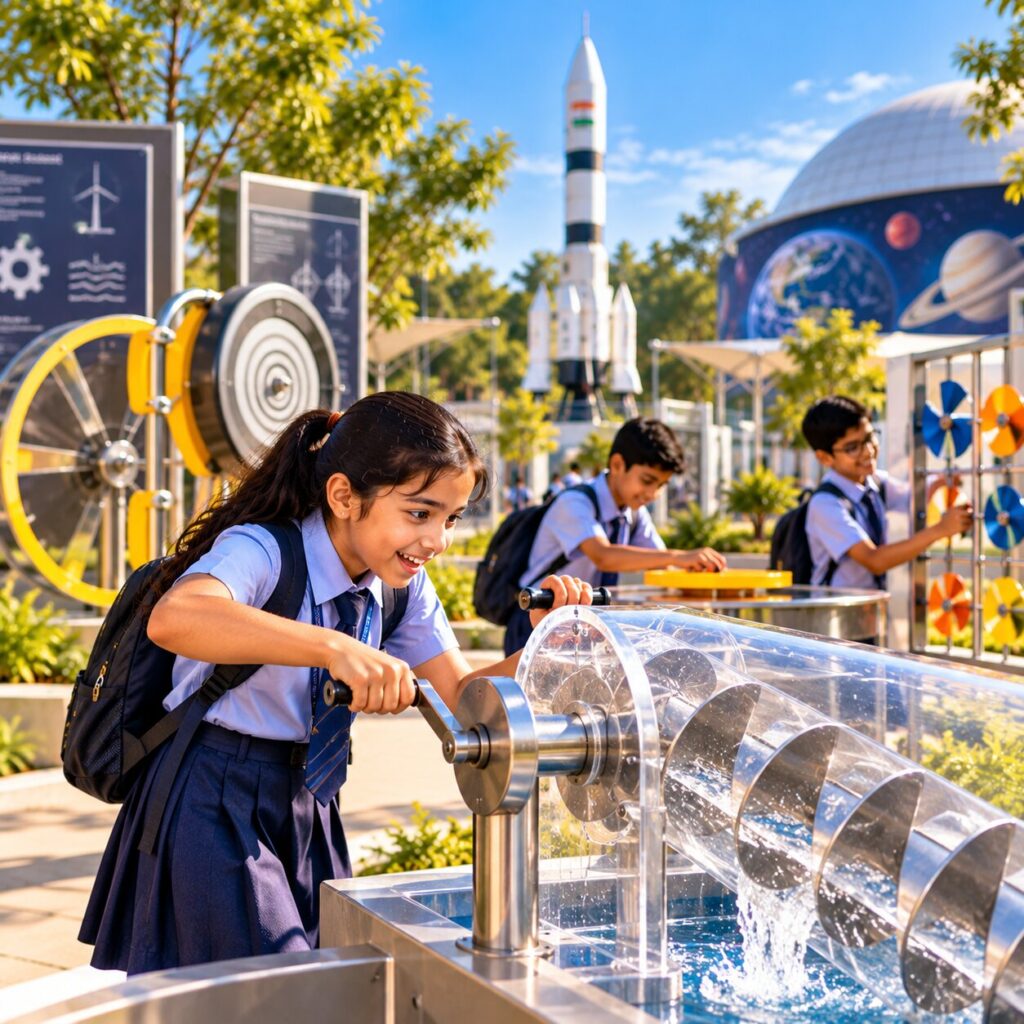
EXPLORE
Use simple actions and observations to see a concept in motion.
Learn through play, movement and repeatable experiments.
EXPERIMENT
A Science Outdoor Park is a purpose-designed outdoor learning environment that combines large-scale interactive science installations, engineering challenges, astronomy experiences and educational interpretation in a public setting.
Zones can be developed as individual learning clusters or combined into a continuous outdoor discovery journey, depending on site size, audience and curriculum goals.
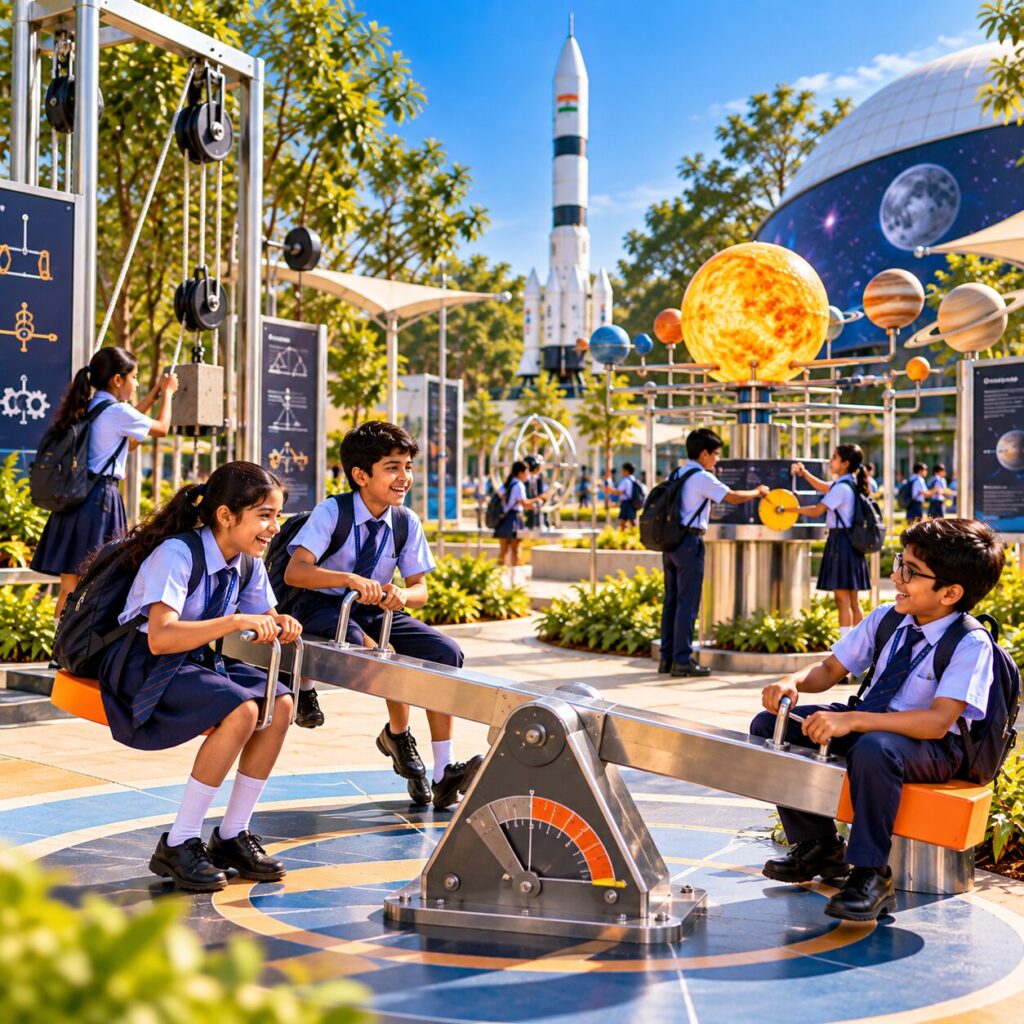
PLAY
Explore force, motion, balance, levers, pulleys, momentum and mechanical advantage through large-scale interactive installations.
Discover planets, orbits, shadows, seasons, the Sun and the scale of the Solar System through outdoor astronomy experiences.
WHAT IS A SCIENCE OUTDOOR PARK?
- Large-Scale Interactive Exhibits — Physical installations designed to be used, not just viewed.
- Outdoor Learning Zones — Science concepts organised into clear, age-appropriate discovery areas.
- Curriculum Connections — Experiences can support school learning and STEM engagement.
- Durable Engineering — Built for repeated public use with practical maintenance considerations.
- Self-Guided Discovery — Visitors can explore at their own pace with clear interpretation.
- Group Learning — Spaces can support demonstrations, school visits and facilitated activities.
SCIENCE OUTDOOR PARK EXPERIENCE ZONES
PHYSICS & MECHANICS
ASTRONOMY & SPACE
SOUND & WAVES
ENERGY & ENVIRONMENT
HUMAN BODY & PERCEPTION
MATHEMATICS
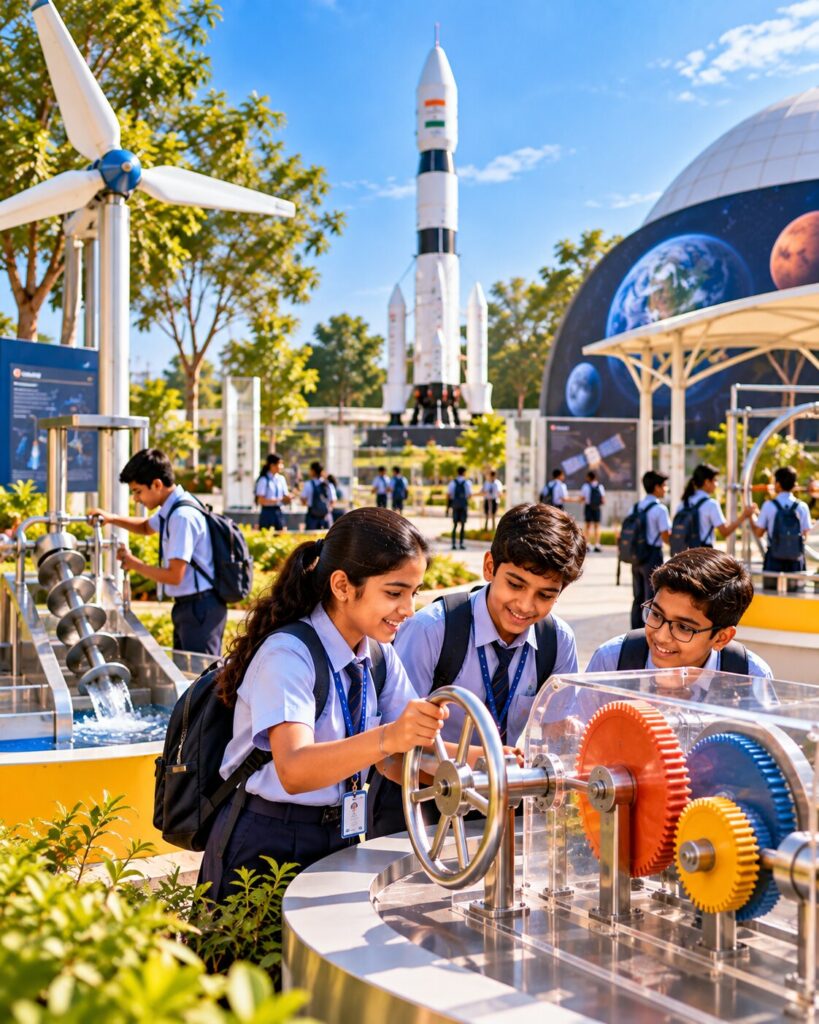
STEM & ENGINEERING
- Hands-On Participation — Visitors operate, touch, move and experiment with installations.
- Visual Interpretation — Clear diagrams and signage connect actions with scientific ideas.
- Repeatable Experiments — Activities can be tested multiple times with different conditions.
- Learning by Doing — Physical experience helps make abstract concepts observable.
- Accessible Experiences — Installations can be planned for varied ages and abilities.
WATER & FLUID MECHANICS
INTERACTIVE LEARNING
THE VISITOR JOURNEY
01 DISCOVER
Structures, mechanisms, robotics-ready spaces, build-and-test challenges and engineering problem stations.
Muskan Aerospace can support the complete journey from site study and concept planning through installation, interpretation, training and handover.
02 INTERACT
03 EXPERIMENT
04 OBSERVE
05 UNDERSTAND
Support science education, CSR and community engagement initiatives.
06 SHARE
Support science education, CSR and community engagement initiatives.
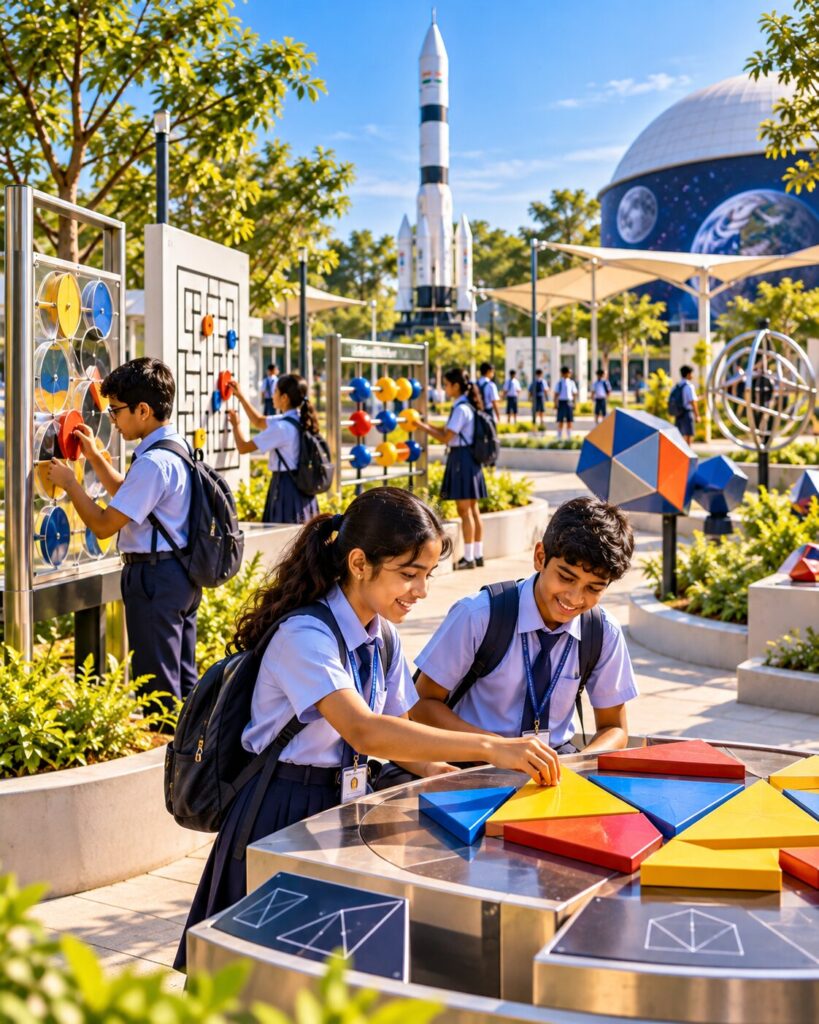
MATH & LOGIC
- 01 SITE STUDY — Understand footprint, circulation, utilities, safety and visitor profile.
- 02 CONCEPT — Define zones, themes, learning outcomes and experience flow.
- 03 DESIGN — Develop exhibit concepts, engineering details, graphics and landscape integration.
- 04 DEVELOP — Fabricate installations, interpretation panels and supporting elements.
- 05 INSTALL — Install, test and commission the park for safe visitor use.
- 06 TRAIN & HANDOVER — Train operating teams and provide documentation for ongoing use.
- 07 SUPPORT — Provide post-installation support and improvement guidance.
STEM & ENGINEERING
FROM CONCEPT TO SCIENCE OUTDOOR PARK
WHO WE SERVE
GOVERNMENT
SCIENCE CENTRES
MUSEUMS
EDUCATIONAL INSTITUTIONS
PUBLIC SPACES
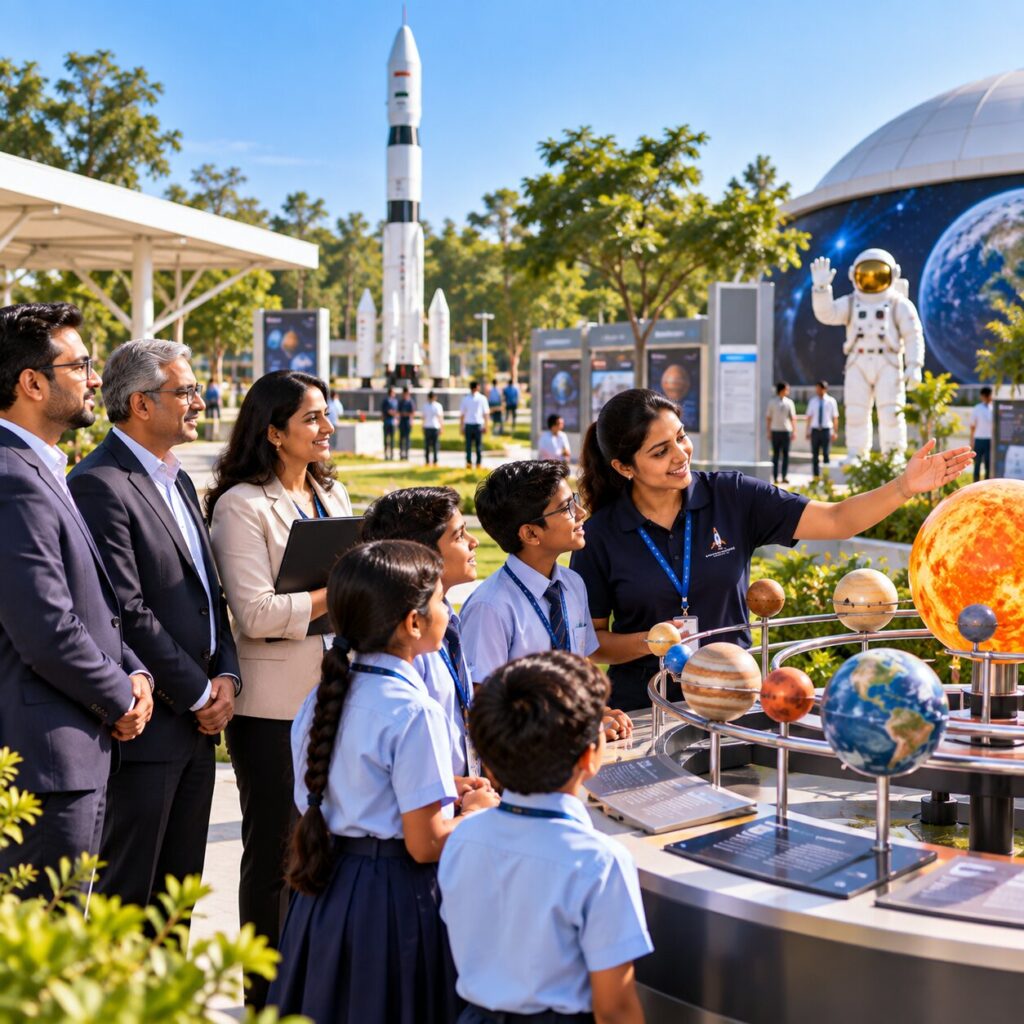
CORPORATE & CSR
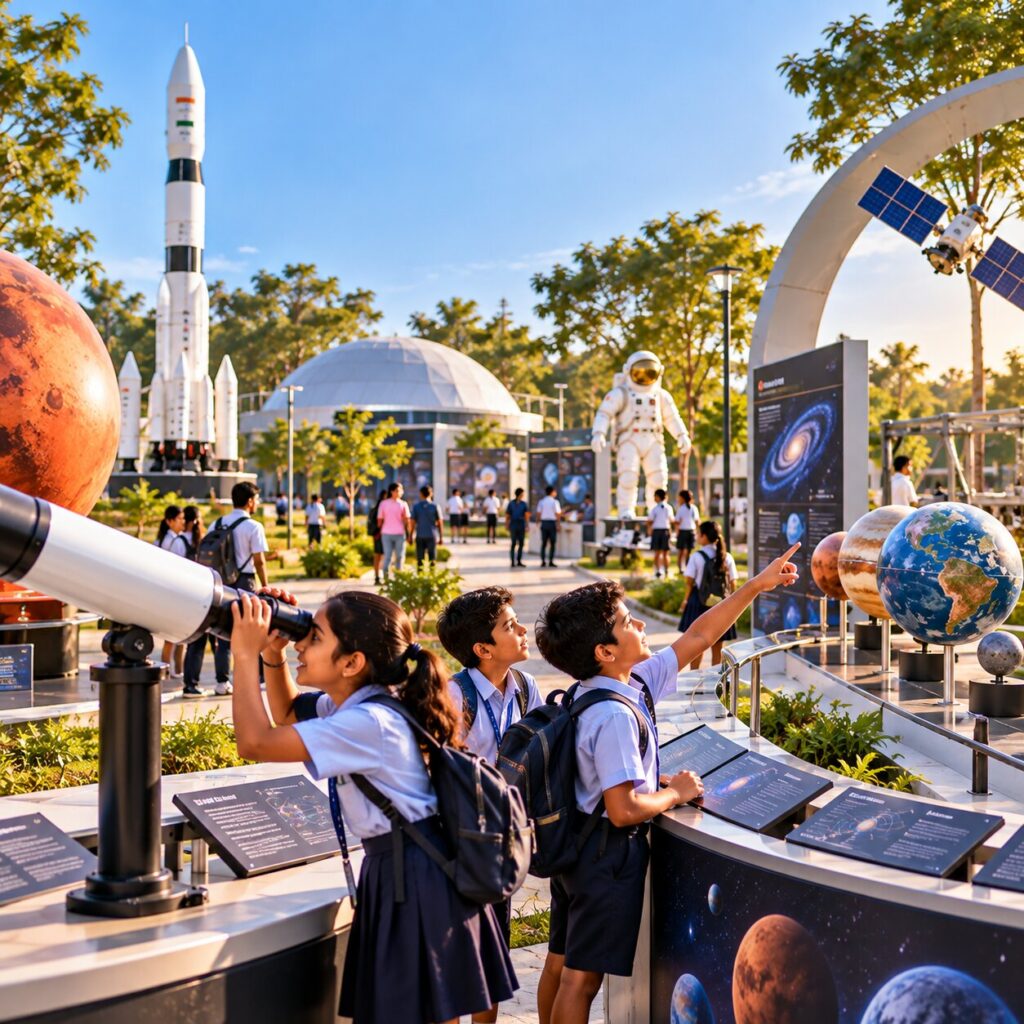
SCIENCE OUTDOOR PARK PROJECTS
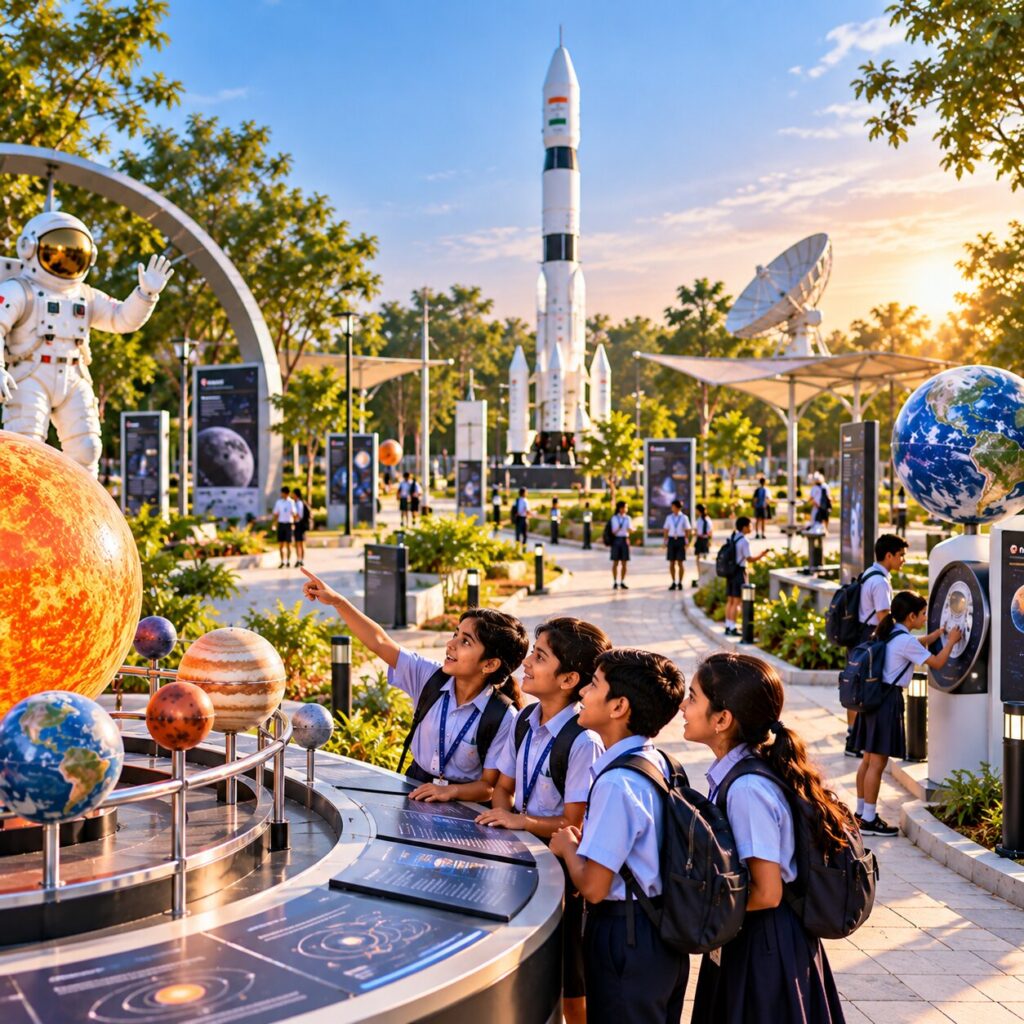
READY TO CREATE A SCIENCE OUTDOOR PARK?
FREQUENTLY ASKED QUESTIONS
Common questions about Science Outdoor Park.
Options include physics, astronomy, sound, energy, mathematics, human perception, engineering and water/fluid installations, selected around the site’s goals and audience.
Yes. Exhibit themes, interpretation and learning activities can be planned around age groups, learning outcomes and STEM education objectives.
Yes. A new outdoor science zone can be developed within an existing campus, park, science centre or public space subject to a site assessment.
The exhibit design can account for outdoor exposure, visitor load, safety, maintainability and practical operating conditions.
The project scope can include site study, concept design, exhibit development, fabrication, installation, interpretation, training and handover.
