
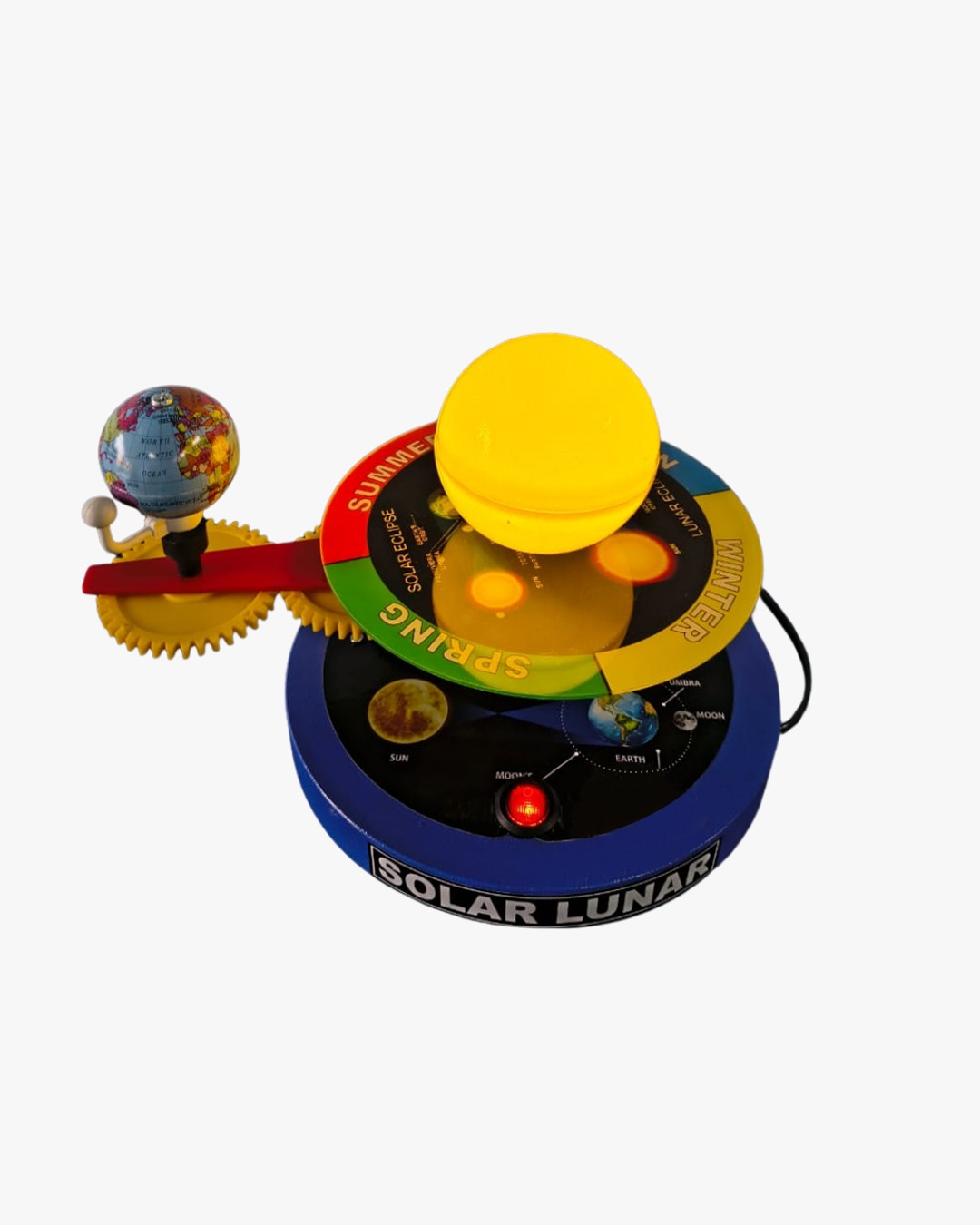
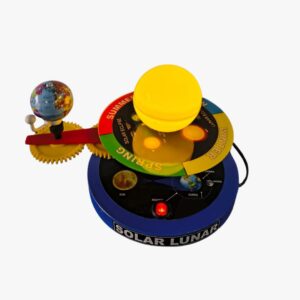
This Solar and Lunar Eclipse Working Model with strong metal base is an interactive scientific apparatus designed to demonstrate the orbital mechanics and spatial alignment of the Sun, Earth, and Moon. It serves as a physical simulation of syzygy—the straight-line configuration of three celestial bodies in a gravitational system.
Core Components
-
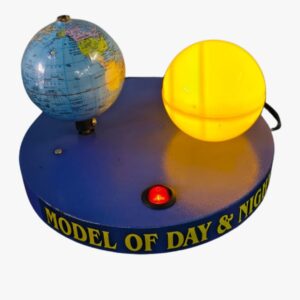
The Light Source (The Sun): A central, high-intensity lamp (usually LED) that acts as the primary light source to cast distinct shadows.
-
The Primary Body (The Earth): A rotating sphere that represents our planet, mounted on an axis to show its tilt and rotation.
-
The Satellite (The Moon): A smaller sphere that revolves around the Earth on a mechanical arm, simulating its 28-day orbital cycle.
-
The Mechanical Drive: A system of gears or pivots that allows users to move the bodies manually or electronically to achieve specific alignments.
How the Model Defines Eclipses
1. Solar Eclipse Simulation
The model demonstrates a Solar Eclipse when the Moon is positioned directly between the Sun and the Earth.
-
The Science: The Moon’s shadow (the Umbra and Penumbra) falls on a specific part of the Earth.
-
The Visual: In the working model, you will see a small dark spot cast onto the surface of the Earth model, simulating what people see during “totality.”
2. Lunar Eclipse Simulation
The model demonstrates a Lunar Eclipse when the Earth is positioned directly between the Sun and the Moon.
-
The Science: The Earth blocks the Sun’s light, casting its massive shadow over the Moon.
-
The Visual: The Moon model enters the “dark zone” created by the Earth’s shadow. In some advanced Muskan models, this simulates the “Blood Moon” effect where the moon appears reddish.

Reviews
There are no reviews yet.